

Permanent link to this article: https://www.worldwarbirdnews.com/2013/06/27/military-aviation-museum-to-sell-its-aircraft/f4u-corsair-at-military-aviation-museum/
Leave a Reply Cancel reply
This site uses Akismet to reduce spam. Learn how your comment data is processed.
Latest Prints

Recent Posts
- OV-10 Bronco damaged in crash in Poland
- France : Two killed in Fouga Magister crash near Paris
- Dan Fordice killed in the crash of P-51D Mustang “Charlotte’s Chariot II”
- An F-14 Tomcat might return to the skies thanks to Congress’ “Maverick Act”
- A rare Douglas TBD-1 Devastator to be recovered by the US Navy
- Investors wanted for historic Spitfire restoration project
Also in the news
- Replica Fokker Dr. I takes to the skies again at Old Rhinebeck Aerodrome
- Albatros D.Va replica arrives at Old Warden
- Canada: Spitfire replica crashes during takeoff in Alberta
- PBY Canso to perform first post-restoration flight with its WW2 pilots in attendance
- Air Mobility Command Museum Rescues C-119
- Two killed in AT-6 Texan crash in Arizona
- FAA Deems B-29 Doc Airworthy, First Flight Imminent
- TAVAS Fokker D.VIII replica to fly in Australia
- Gatwick Aviation Museum to reopen after three years
- Mitchell Higginbotham †
Advertising

Recent Comments
- FJ Bell on AT-6D crashes due to fuel starvation in Ohio
- David L Nelson on Fokker D.VIII replica with original Gnome engine flies at Old Rhinebeck
- Marc Birnbaum on Wreck of Richard Bong’s P-38 “Marge” found in Papua – New Guinea
- Daniel Alioa on Randy “Duke” Cunningham, Vietnam War ace, has passed away
- John Nichols on Randy “Duke” Cunningham, Vietnam War ace, has passed away
2 comments
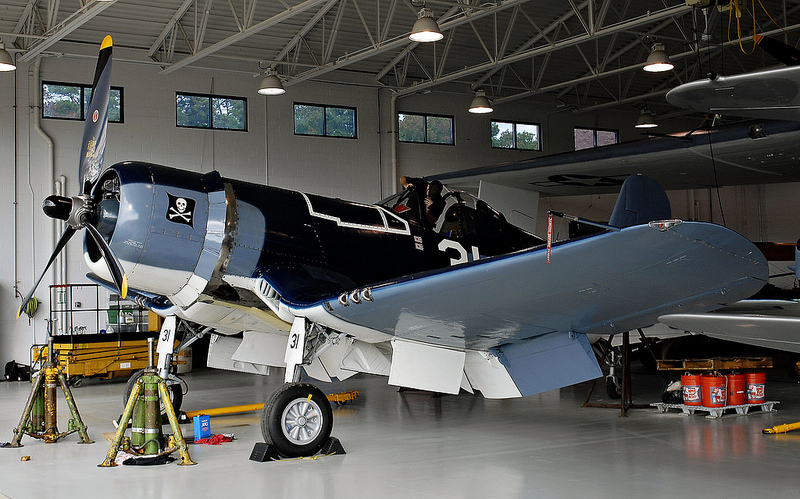
My colleague is an avid model maker and queried the white outline on the top of the fuselage forward of the cockpit, which I’d never noticed previously. Can you enlighten us?
Author
Those are actually strips of tape, placed over the seams around the fuel tank panels, which weren’t airtight. The tape was generally coated with sealant, to make the seams airtight and prevented fumes and fuel from leaking out and smearing the canopy, or fumes from accumulating in the cockpit and creating a fire hazard. Perhaps someone with more knowledge on this specific point can complete it (or correct it if I’m mistaken).