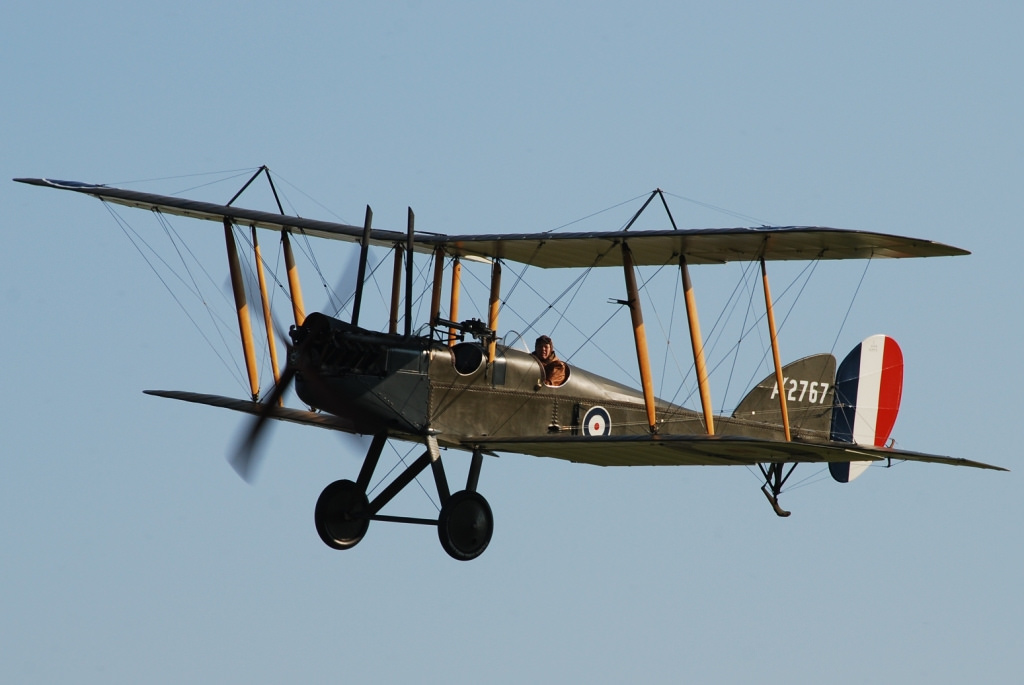
One of WAHT’s Be.2c replicas. (Photo Robert Payne (CC BY 2.0))
New aircraft will be joining the World War 1 Aviation Heritage Trust’s collection this year: an Albatros D.Va and Sopwith Snipe from New-Zealand in late spring, and will be followed later by a RAF S.E.5a.
The WW1AHT intends “to provide an enduring flying collection of World War I Allied and German aircraft based in the UK flying from heritage sites like Stow Maries Great War Aerodrome“. The trust has launched a Kickstarter funding campaign to help finance this project.
Permanent link to this article: https://www.worldwarbirdnews.com/2015/02/23/albatros-d-va-sopwith-snipe-and-raf-s-e-5a-for-the-world-war-1-aviation-heritage-trust/
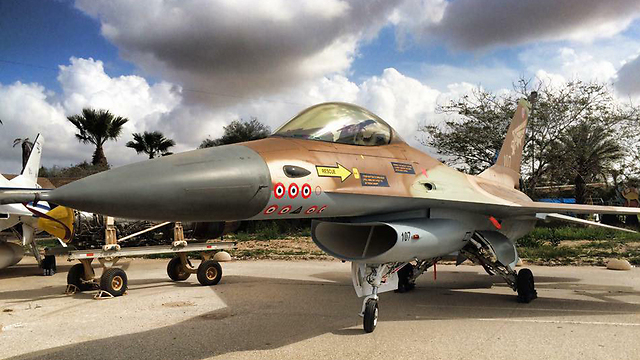
F-16 Fighting Falcon No 107 of the Israeli Air Force was retired and is now part o the collections of the IAF Museum located at the Hatzerim airbase in Negev. This aircraft holds the distinction of being the F-16 with the greatest number of air-to-air victories, with a total of 7.
No 107 entered service in 1980 and took part in the historical raid against the Iraki nuclear plant on 7 June 1981 with Major General Amos Yadlin at its controls.
It achieved its first air-to-air kill on 21 April 1982 when Colonel Zeev Raz shot down a Syrian MiG-23 with a missile. On June 9, it was used in the destruction of two other Syrian MiG-23 by commander Eliezer Shakedi and Colonel Elian Sativa. Finally, on 11 June 1982, it was used to destroy two more Syrian MiG-23, a Sukhoi Su-17 and a Gazelle helicopter, still with Sativa at the controls.
From 1995, it was used as a training aircraft for IAF cadets and was retired in 1994. It was cleaned up and prepared before joining the collections of the IAF museum.
The former U.S. Air Force Lockheed VC-121A Constellation (s/n 48-610) flies over Davis-Monthan Air Force Base, Arizona (USA), as it departs on its way to a private company for further restoration work on 24 October 1990. The aircraft had already undergone restoration at the Aerospace Maintenance and Regeneration Center at Davis-Monthan AFB after being kept in storage for over 20 years. 48-610 served as Dwight D. Eisenhower’s presidential aircraft “Colombine II” from January 1953 to November 1954 until replaced by the “Colombine III” VC-121E. Since 1989 it is privately owned (civil registration N9463). (Photo TSgt. Ron Woods, USAF)
The Lockheed C-121 Constellation known as Columbine II, which flew President Dwight Eisenhower and had been stored at Manara Air Park in Arizona since its last flight in 2003, will shortly examined by Dynamics Aviation to evaluate whether it can be restored to airworthiness.
Several parts are missing and will need to be found and installed if Dynamics Aviation is to restore the aircraft. If Columbine II can be restored, it will be presented at airshows and the public will be able to visit the aircraft while it is on the ground. Flight rides will probably not be available as the aircraft will remain in the Experimental/Exhibition category. Continue reading
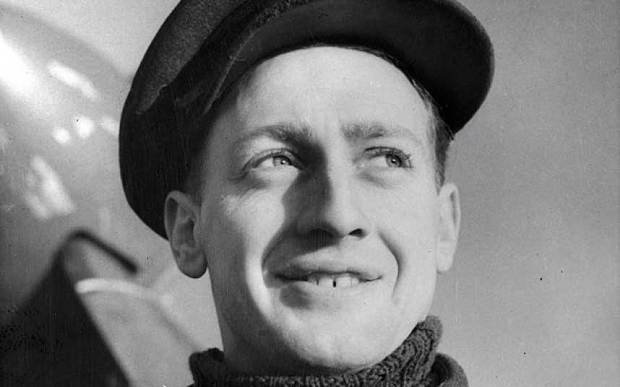
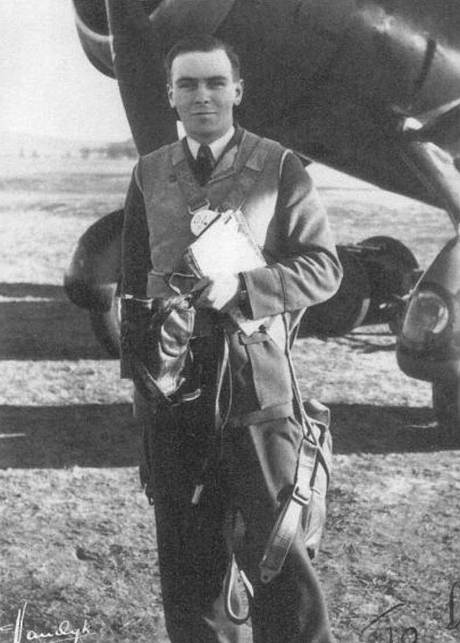
Squadron Leader Harvey Sweetman, who has died aged 93, was one of the most successful fighter pilots against the V-1 flying bomb, accounting for 11 of them during the autumn of 1944.
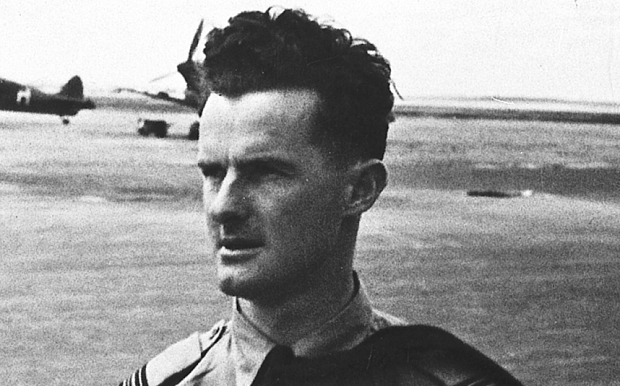
Squadron Leader Jack Storey, who has died aged 99, accounted for eight Japanese aircraft during the Burma campaign, making him its second most successful Commonwealth fighter pilot.
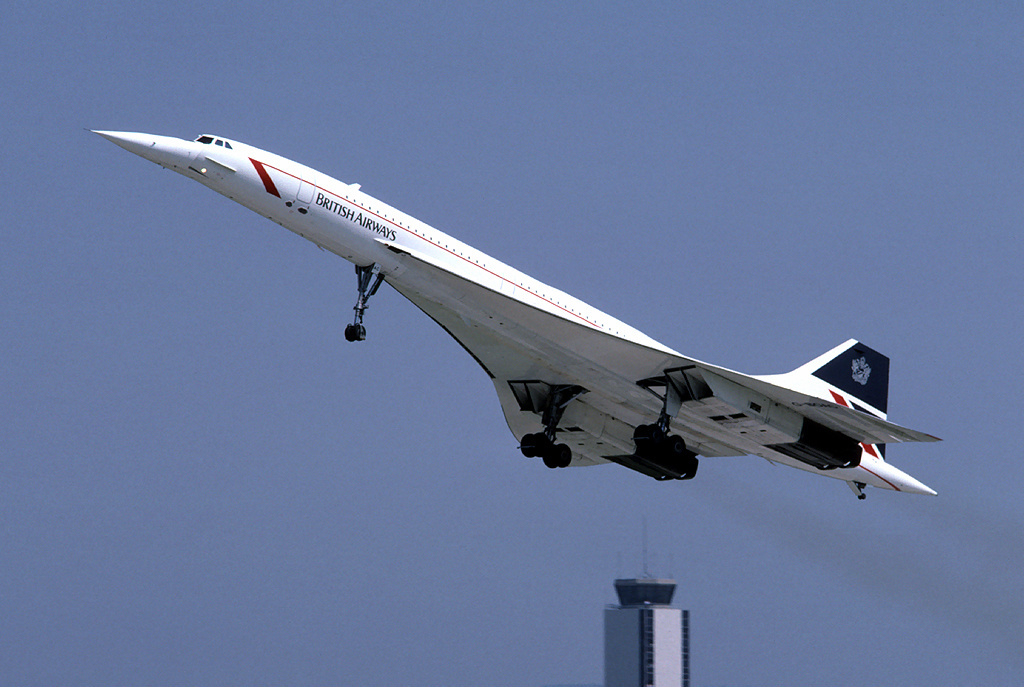
British Airways Concorde G-BOAC in 1986. (Photo Eduard Marmet (CC BY-SA 3.0))
A museum, visitor centre and home for the last Concorde to fly is expected to open in two and half years after the project was awarded a grant of £4.7 million by the National Lottery. The site will house a collection of planes, aircraft and memorabilia connected to Bristol’s aviation industry along with a shop, cafe and visitor centre, in addition to Concorde No 216, the last of its type to fly.
Fantasy of Flight’s new Museum opens on Friday, January 30th 2015. This smaller, light version of Fantasy of Flight will be open on Fridays, Saturdays and Sundays from 11:00 AM to 3:00 PM. Admission will be: $12.00 Adults, $10.00 Seniors and $8.00 for Kids.
Edward J. Saylor, the engineer of the 15th aircrew that participated in the famous 18 April 1942 Doolittle Raid on Japan, passed away at his home on January 28, 2015. His crew bombed targets in Kobe and had to ditch its aircraft near the Chinese coast after the raid. Saylor stayed with the Air Force after the war, retiring in 1967 with the rank of Lieutenant-Colonel.
A bomber crew of No. 311 (Czechoslovak) Squadron RAF study a map, while sitting on 250-lb GP bombs which are about to be loaded into their Vickers Wellington Mark IC at East Wretham, Norfolk. (Photo IWM)
The RAF Museum Cosford’s Vickers Wellington might receive the colours and markings a No 311 (Czechoslovak) Squadron later this year.
“If they would enforce the idea of using the 311th Squadron, it would be a great success. It would be a visible reminder of the respect that the British feel toward the Czechoslovaks for their contribution to the victory over Nazism,” Czech Radio General Manager Peter Duhan said.
When Fantasy of Flight was created, its Spitfire Mk XVI was airworthy but was rapidly grounded due to technical problems. After having been statically exposed for years, its engine was restarted on January 16, for the first time in 17 years.
After some repairs and adjustments, Kermit Weeks hopes to have it flying in the near future.
Permanent link to this article: https://www.worldwarbirdnews.com/2015/01/24/fantasy-of-light-spitfire-mk-xvi-engine-runs-for-the-first-time-in-17-years/
Gerald ‘Jerry’ Billing, considered one of the greatest Spitfire demonstration pilots to fly in the North American air show circuit passed away peacefully January 9th. A veteran of World War II he served 2 tours with over 250 combat sorties and stayed in the RCAF until 1964 becoming a member of Canada’s first jet demonstration team The Blue Devils. He was also the head aerobatic trainer for the RCAF Golden Hawks and throughout his long and distinguished career flew over 170 different aircraft from the Tiger Moth to the F-104 Starfighter.
Squadron Leader John Rowland, who has died aged 94, was awarded the DFC twice in three days in 1943; later, on completion of 50 bombing operations, he received the DSO.
In 1989 at the Paris air show, Viktor Pugachev in the Sukhoi Su-27 Flanker made the first public display of what became known as “Pugachev’s Cobra”, despite the fact that the maneuver was pioneered by LII test pilot Igor Volk during the Flanker’s trials. The maneuver is mostly useless in air combat but has always been a great crowd-pleaser.
Since then, many other aircraft types have proven capable of executing the Cobra. These aircraft are mostly modern designs with high thrust-to-weight ratios and thrust vectoring.
Except for the Saab 35 Draken, whose maiden flight was in 1955…
Don’t take my word for it and advance the video to 1:50 to see this classic Swedish delta-wing interceptor perform this extraordinary maneuver .
Permanent link to this article: https://www.worldwarbirdnews.com/2015/01/07/was-the-flanker-the-first-aircraft-capable-of-executing-the-cobra-maneuver/
Lovell Steward (25 February 1917 – 17 December 2014) was a member of the famed “Tuskegee Airmen” during World War II, and flew 143 combat missions in the Mediterranean Theater of Operations in 1944 in the P-39 Airacobra, P-40 Warhawk and P-51 Mustang.
After his military discharge in 1946, he returned to Los Angeles with his wife to buy a house but they were not able to secure a mortgage because they were black. Because of this, he went to real estate school and obtained a real estate license. In the 1950s he helped to integrate parts of Los Angeles by facilitating home sales.
As a member of the Tuskegee Airmen, he received the Congressional Gold Medal in 2007.





 Lovell Steward (25 February 1917 – 17 December 2014) was a member of the famed “Tuskegee Airmen” during World War II, and flew 143 combat missions in the Mediterranean Theater of Operations in 1944 in the P-39 Airacobra, P-40 Warhawk and P-51 Mustang.

Recent Comments